Introducing our range of fresh onions
Our range of fresh onions is aimed exclusively at wholesalers , professional traders and players in the agri-food industry . We offer a rigorous selection of onions from different sectors:
-
Conventional : sorted by size and dry matter content, for maximum performance in processing or resale.
-
Untreated after harvest (ZNT) : suitable for demanding distribution, particularly for specialist circuits.
-
Certified Organic : grown according to organic farming standards, to meet the growing demand of the professional organic market.
Our offer covers all the needs of the wholesale onion market , with varieties adapted to the constraints of conservation, preparation and presentation on shelves or in the kitchen.
Our commitments to hassle-free supply
We guarantee you a simple and seamless agricultural supply , without unnecessary middlemen. Our onions are sold at producer prices , with an unbeatable price-quality ratio and careful delivery throughout France. Whether you order a few hundred kilos or several tons, you benefit from a sliding scale of prices according to volume and responsive and quality after-sales service in case of unforeseen circumstances.
Our sales department, specializing in garlic, onion and shallot cultivation, is committed to providing you with a personalized quote within 48 hours , along with free advice on variety choice, packaging and harvest schedules.
By working with us, you join a network of professionals who choose professional quality , optimized logistics and a direct relationship with sector specialists .
Varietal segmentation for commercial production of fresh onions
The French market for ready-to-eat fresh onions is structured around well-established varietal preferences, each meeting specific culinary uses and precise customer expectations.
Yellow onion: reference variety for mass production
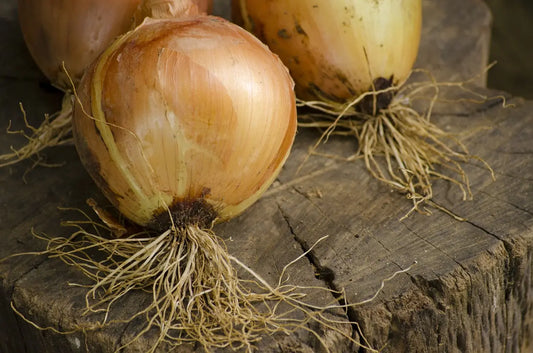
The yellow onion dominates the ready-to-use fresh onion market, representing 65% of the market share . Its culinary versatility and excellent storage capacity make it a mainstay for restaurants, communities and the food industry. Its strong and pungent flavor, pronounced odor and ability to caramelize easily make it the ideal aromatic base for a multitude of stews, soups, sauces and stir-fries. For professionals, varieties such as 'Stuttgarter Riesen' , 'Jaune Paille des Vertus' , and 'Sturon' are particularly prized for their yield and storage. The small sizes, known as saucier onions, are also in demand for flavoring sauces and stews.
Red onion: high-end positioning
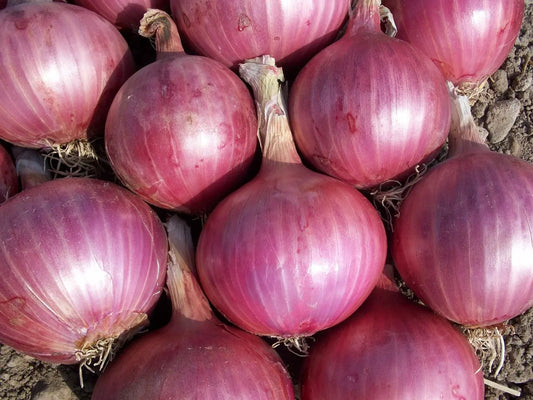
Representing 20% of the market , the red onion benefits from a qualitative image and is positioned in a high-end segment. Its distinctive purple color and milder, sweeter taste make it very popular for raw consumption, where it adds crunch and a beautiful visual touch to mixed salads, burgers, sandwiches and cold garnishes. Varieties such as the 'Red Baron' and the 'Rouge de Brunswick' are particularly sought after for their taste qualities and excellent conservation. Rich in antioxidants, particularly anthocyanins, the red onion is growing in popularity among health-conscious consumers, making it a preferred choice for caterers and commercial catering attentive to presentation.
White onion: short-cycle niche segment
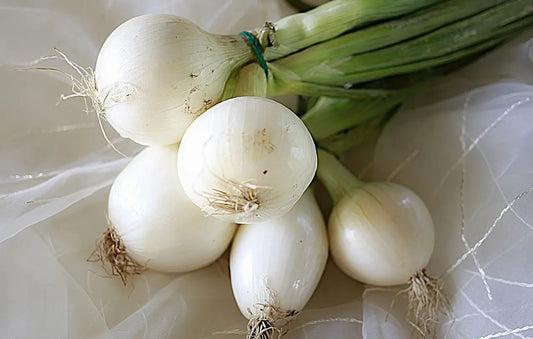
With 15% of the market share , the white onion is mainly consumed fresh, often young, and offers a melting texture and a relatively mild flavor. The 'Blanc Hâtif de Paris' and 'Snowball' varieties are very popular for their precocity and sweetness, ideal for summer salads or marinated in pickles. Although less used in collective catering, it is very present in commercial catering for starters and salads, and by the condiment industry.
Productions under appellations of origin: ultra-premium from the French terroir
Two fresh onions benefit from a Protected Designation of Origin (PDO) in France: the Sweet Onion of the Cévennes and the Pink Onion of Roscoff. These exceptional products, often sold at premium prices, allow for significant value and are highly sought after by gourmet restaurants and high-end brands. The Sweet Onion of the Cévennes , a pale yellow onion with a sweet taste and melting texture, and the Pink Onion of Roscoff , traditionally sold in braids or nets, embody the quality and authenticity of the French terroir.
Varietal innovations and emerging genetic developments
The fresh onion market continues to innovate to meet consumer expectations and production challenges. "No-tear onions," such as the Orion variety developed by Bejo or marketed under the "Sunions" brand, offer a mild, sweet flavor and do not cause tears when cut, representing a promising marketing opportunity. Furthermore, new mildew-tolerant varieties, such as HAECKERO F1 and 37-119 F1 , are emerging to address growers' phytosanitary concerns.
Packaging strategies and commercial formats
The growing demand for practicality in professional cooking has profoundly influenced the packaging forms of fresh onions.
Traditional packaging: economic optimization and conservation
The whole onion, with its dry skin, remains the classic and most economical form, distributed in bulk or in nets/bags of various sizes (e.g.: 1 kg, 5 kg, 10 kg, 15 kg, 25 kg). This format is particularly popular with wholesalers and purchasing centers, as well as with restaurateurs who have labor for peeling, thanks to its long shelf life. The net remains the reference packaging with 45% popularity , while bulk represents 30% of sales , appreciated on markets and at greengrocers.
Peeled onions: value-added service for catering
Very popular with professionals, whole peeled onions are stripped of their skin and root, then packaged in vacuum-packed bags or buckets (a few kilos). These ready-to-use onions offer considerable time savings and reduce kitchen waste, thus meeting the needs of high-volume restaurants and central kitchens. Their fresh storage is approximately one week to 10 days .
Fourth fresh range: ready-to-use, highly practical solutions
The 4th range , which includes raw, ready-to-use products packaged in a controlled atmosphere, is experiencing strong growth in the fresh onion market. These onions, already cut into strips, cubes or rings, are offered in vacuum-packed bags or trays (from a few hundred grams to 1-2 kg). They specifically target mobile and fast-food restaurants (sandwich shops, kebabs, pizzas), caterers and communities, which are looking to maximize efficiency and regularity of cutting without a cutting step. Although more expensive per kilo and with a shorter shelf life (a few days), these products free teams from the tedious and irritating tasks related to onion preparation, a powerful selling point.
Specialized formats and niche packaging
The tray, capturing 15% of the market , meets the practicality expectations of urban consumers. The traditional braid (5%) and cardboard packaging (5%) remain niches associated with appellation or local products.
Market analysis and professional business levers
Several factors influence the professional fresh onion market, providing strategic levers for wholesale players.
Pricing structure and valuation opportunities
Onion prices vary significantly depending on the variety and production methods. The organic segment , although representing around 6% of the total market , is experiencing sustained growth and offers prices significantly higher than conventional (for example, €1.25/kg for organic yellow onions compared to €0.37/kg excluding VAT for conventional onions, i.e. a premium of 237% ). This premium opportunity should be seized to attract customers concerned about the environment and health. Prices are generally moderate in autumn, when supply is abundant, then can increase at the end of winter before falling in spring with the arrival of imports.
Distribution networks and major players in the sector
Large-scale distribution represents 75% of fresh onion sales , while out-of-home catering, wholesalers and exports share the rest. Early produce, although a minority in volume, benefits from a qualitative image. The main players in the national sector are often grouped into cooperatives, and downstream, distribution relies on specialized wholesalers (such as national interest markets such as Rungis ), central purchasing offices for large-scale retailers and distributors for out-of-home catering (RHD) such as Pomona TerreAzur , Métro , or Transgourmet . These players are increasingly favoring French origin, driven by consumers and brands, which constitutes a competitive advantage.
Seasonal management of supplies and sources of origin
Although French onions are available year-round thanks to early and late varieties and storage techniques, the main season runs from July to May . The peak availability period for French production is from September to December . Storage in ventilated or refrigerated storage allows marketing to be extended until spring. However, from April-May, French stocks decline, and the market shifts to imports, mainly from the Netherlands, Spain, or countries in the southern hemisphere to ensure a continuous supply. For a wholesale site, adapting its sources throughout the year and communicating the origin of the products is essential.
Evolution of consumer demands and growth segments
French consumers increasingly value local and French-origin products ( 79% of French people ). This trend represents a major opportunity to highlight the origin of your products and protected designations. The growing demand for organic and certified products (such as HVE - High Environmental Value , or Zero Pesticide Residue ) is also a key factor, partly driven by public policies and consumer interest in ingredients perceived as healthier. Finally, reducing food losses and waste throughout the chain is a growing concern, favoring ready-to-use products that transfer waste management to the supplier and optimize the use of raw materials.